
Twinline
Twinline fungicide is back, with broad-spectrum control of tough leaf diseases on cereals
1 Plant Health Benefits refer to products that contain the active ingredient pyraclostrobin.
6 AVAILABLE
Cereals
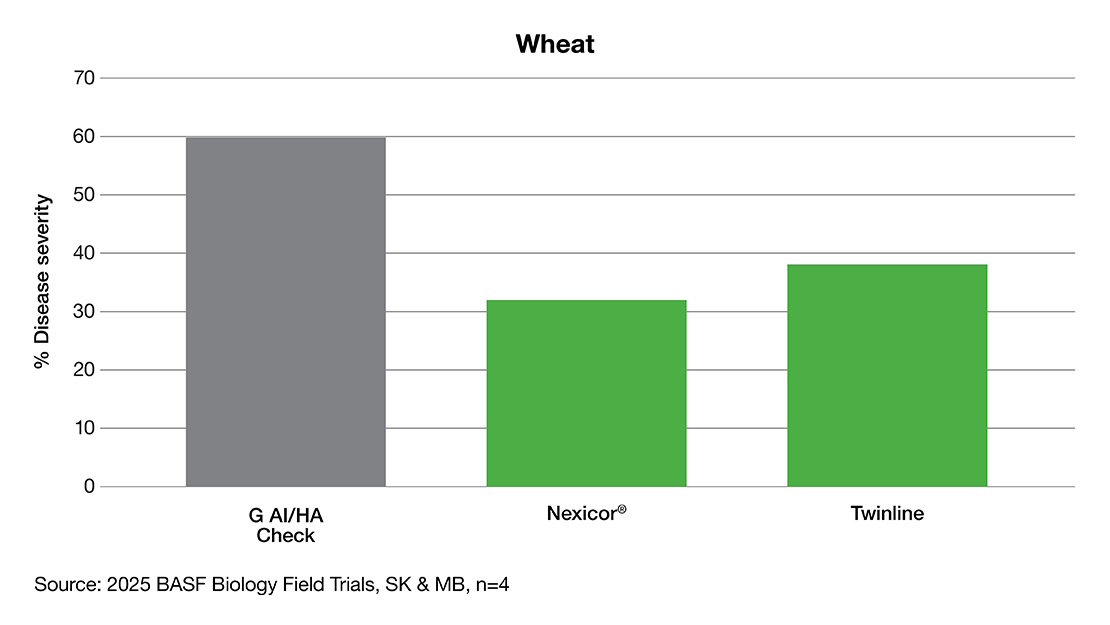
Twinline provides high performance on leaf disease in wheat —boosting yields and delivering strong ROI.
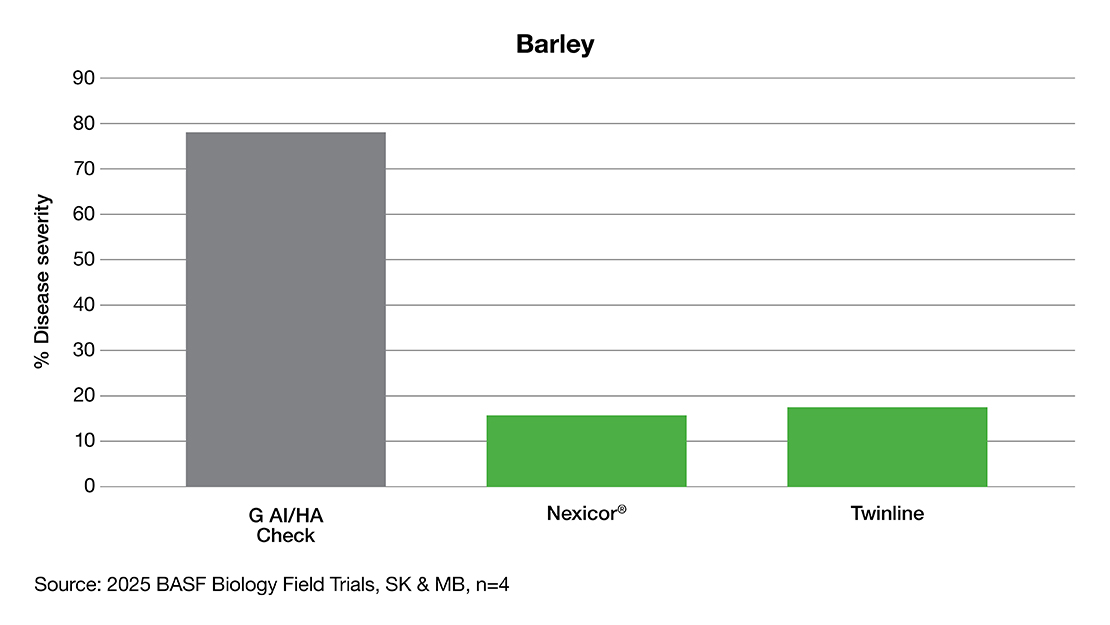
Twinline provides high performance on leaf disease in barley —boosting yields and delivering strong ROI.
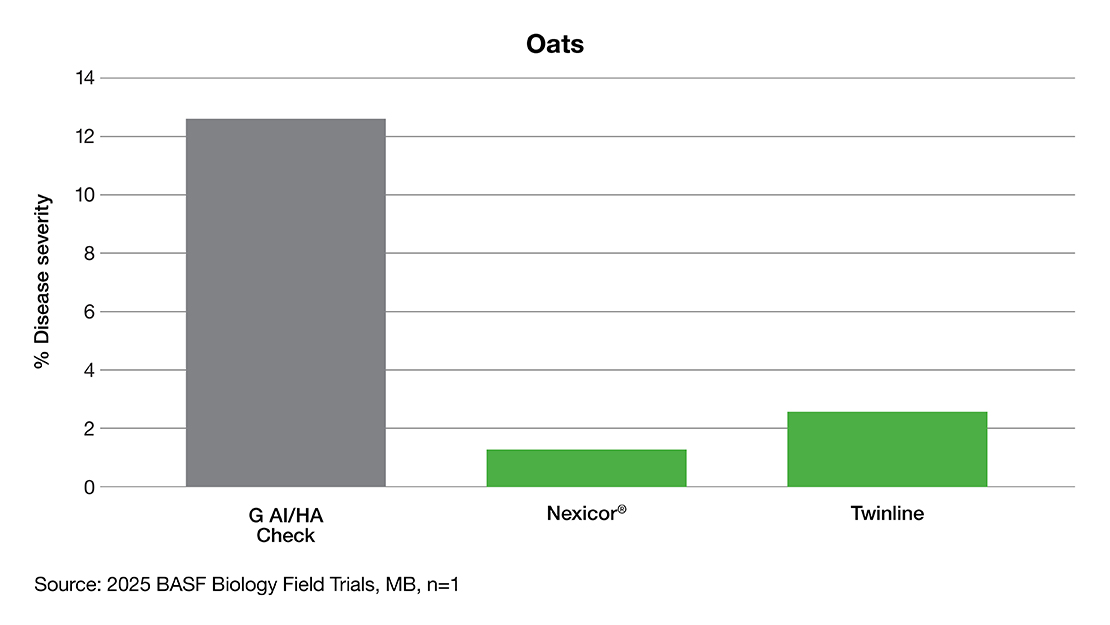
Twinline provides high performance on leaf disease in oats —boosting yields and delivering strong ROI.
| Crop | Disease |
|---|---|
| In barley | Net blotch (Pyrenophora teres) Scald (Rhynchosporium secalis) Spot blotch (Cochliobolus sativus) Stripe rust (Puccinia striiformis) |
| In oats | Crown rust (Puccinia coronata) |
| In rye | Leaf rust (Puccinia recondita) Powdery mildew (Erysiphe graminis) |
| In wheat (all types) and triticale | Leaf rust (Puccinia recondita) Powdery mildew (Erysiphe graminis f. sp. tritici) Septoria leaf spot (Septoria tritici or Leptosphaeria nodorum) Spot blotch (Cochliobolus sativus) Stripe rust (Puccinia striiformis) Tan spot (Pyrenophora tritici-repentis) |
Rainfastness – 1 hour.
Twinline should be applied at flag leaf for optimal Plant Health Benefits1, including disease control.
Do not apply during periods of dead calm, gusty winds or conditions conducive to spray drift.
Up to 2 applications may be made per season, with a minimum spray interval of 10 to 14 days.
Do not use less than the minimum water volumes and ensure thorough coverage of foliage.
Begin applications of Twinline® prior to disease development or at the onset of disease symptoms2
2 While Twinline can be applied up to 3 days after full emergence of main stem heads, research suggests that applying at flag leaf (GS 37-39) helps maximize yield potential in cereals.
One case of Twinline treats 80 acres.
| Barley, oats, rye, triticale, wheat | 202 ml/ac (500 ml/ha) |
Water Volume
| Ground application | 40 L/ac (10 gal/ac) |
| Aerial application | 20 L/ac (5 gal/ac) |
Mixing order
1. Fill the spray tank 1/2 full of water and start agitation.
2. Add the required amount of Twinline to the tank.
3. If tank mixing, add the required amount of the tank-mix partner.
4. Continue agitation while filling the remainder of the spray tank.
None on label.